
LG is reportedly considering an exit from the competitive smartphone market. The company may be “considering all possible measures, including sale, withdrawal and downsizing of the smartphone business,” an LG official said, as per a report. A fresh report suggests that LG is considering moving 60 percent of its staff to other business units within the company or to other LG affiliates. The future of the rest 40 percent of the staff is still a mystery, but the report cites the company official who said that “regardless of any change in the direction of the smartphone business operation, the employment will be maintained.”
The Korea Herald reports that LG CEO Kwon Bong-seok has sent out an email to its employees explaining the intention to shut down its smartphone business. The company has reportedly lost about $4.5 billion (roughly Rs. 32856 crores) over the past five years, and an official claims that it was time for LG to make a move. “Since the competition in the global market for mobile devices is getting fiercer, it is about time for LG to make a cold judgment and the best choice. The company is considering all possible measures, including sale, withdrawal and downsizing of the smartphone business,” an LG official told the publication.
LG competes with home rival Samsung in the smartphone business, along with several other budget smartphone makers from China like Xiaomi, Oppo, Vivo, and OnePlus. The CEO reportedly assured his employees that no one would be fired, although the report suggests that 60 percent of the staff will be absorbed elsewhere. The remaining 40 percent could continue to remain in the smartphone arm if the company looks to downsize and focus on just flagship models. Last year, LG introduced the dual-screen Velvet and flip LG Wing handsets with the aim to stand out and offer a unique experience.
LG Velvet Review
This report comes soon after CES 2021, where LG showcased its unique rollable display smartphone. It comes with a resizable screen and is part of the company’s Explorer Project. In any event, LG’s mobile communications business has reported an operating loss for 22 consecutive quarters.
LG Teases a Rollable Display Smartphone-Tablet Hybrid
LG Wing Update Makes Its Dual Screens Easier to Use
Recently, LG even reorganised its mobile phone division to increase outsourcing of its low to mid-end smartphones. It adopted the original design manufacture (ODM) structure to enable outsourcing of design and manufacture of smartphones, with LG putting its label on the product.
Apple Said to Consider Foldable iPhone; Minor Changes Planned for 2021 Models

Apple has begun early work on an iPhone with a foldable screen, a potential rival to similar devices from Samsung Electronics Co. and others, though it’s planning only minor changes for this year’s iPhone line.
The Cupertino, California-based company has developed prototype foldable screens for internal testing, but hasn’t solidified plans to actually launch a foldable iPhone. The development work hasn’t expanded beyond a display, meaning Apple doesn’t yet have full handset prototypes in its labs, according to a person familiar with the work, who asked not to be identified discussing private matters.
Like Samsung’s Galaxy Fold, the Motorola Razr reboot and other offerings from Chinese companies including Huawei, a foldable iPhone would let Apple make a device with a larger screen in a more pocketable package. Apple has internally discussed a number of foldable screen sizes, including one that unfolds to a similar size as the 6.7-inch display on the iPhone 12 Pro Max. Current foldable phones have screens that are from 6 and 8 inches unfolded.
Apple’s Foldable iPhone Prototypes Pass Internal Durability Test: Report
The foldable Apple screens in testing, like those from Samsung, have a mostly invisible hinge with the electronics stationed behind the display, the person said. Other companies, including Microsoft , have recently launched devices with visible hinges separating two distinct panels. An Apple spokeswoman declined to comment.
This would be a radical departure for Apple. Its pioneering touchable, all-screen smartphone is arguably the most successful consumer technology product in history, helping make Apple the world’s most valuable company. However, a foldable iPhone is likely years away or ultimately may never be introduced. The company is currently focused on launching its next-generation flagship iPhones and iPads later this year.Apple isn’t planning major changes for this year’s iPhone line given the enhancements made to the smartphone in 2020, including 5G and new designs, according to people familiar with the situation. Inside Apple, engineers consider the next iPhones another “S” version of the device, the nomenclature typically given to new iPhones with minor upgrades.
Apple Tipped to Be Working on Clamshell-Like Foldable iPhone
The Covid-19 pandemic has also complicated product development, with Apple hardware engineers only working at the company’s Silicon Valley offices a few days a week and in limited numbers. That has meant offloading work to Apple’s engineers in China.
Last year, the pandemic delayed the iPhone 12
₹ 79,899’s release by several weeks, but Apple was able to still include nearly every intended feature except an accessory dubbed “AirTags” for locating physical items like backpacks and keys. The company now plans to launch that accessory this year, and it is planning multiple accessories for it including a leather keychain. Samsung announced a similar gizmo earlier this month.
Though overall changes will be minor, Apple is still testing a key upgrade for 2021: an in-screen fingerprint reader. This would add a new method for users to unlock their iPhone, going beyond a passcode and Face ID facial recognition. Apple started to move away from fingerprint sensors in 2017 with the launch of the iPhone X, but Touch ID has remained as a feature on Mac laptops and cheaper iPhones since then. Qualcomm Inc., which provides Apple with 5G modems, earlier this month announced a faster in-screen fingerprint sensor.
The feature would be convenient in an environment where users wear masks, which are often incompatible with facial recognition. An in-screen fingerprint reader, which has also been featured on Android phones for several years, could also be quicker than Face ID for some users. Apple won’t remove its facial recognition scanner though as it’s still useful for augmented reality and camera features.
Apple has also discussed removing the charging port for some iPhone models in favor of wireless charging. The company moved to a magnetic MagSafe charging system with the iPhone 12, in addition to removing the charging brick from the iPhone box last year. It’s also bringing this charging technology back to the MacBook Pro.
For its tablet line, Apple is planning a new iPad Pro that looks similar to the current model but adds a MiniLED display and much faster processor. A thinner and lighter entry-level iPad that uses the same design as the 2019 iPad Air is also in the works.
YouTube Testing a New Feature That Lets Users Buy Products Shown in Videos
YouTube is testing a new feature that lets users buy products they see in videos directly from the platform. Viewers will be able to discover and shop for products featured in select YouTube videos. The feature is currently being tested by the video-streaming platform with a small number of users in the US on Android, iOS, and the Web. Chosen creators who are part of this pilot can add certain products to their videos that will be available for purchase via a shopping bag icon.
The Google-owned company has shared details about the new feature being tested on a Google support page. YouTube says that the feature will let viewers get relevant information and buying options for products they see in videos. The platform says that it is working with select creators for this pilot.
Viewers will be able to see a list of featured products by clicking on the shopping bag icon that will appear in the bottom left corner of some video. From here, they can explore each product’s page, where they will find more information, related videos, and options to purchase the product.
YouTube Adds Voice Commands on Web for a Smoother User Experience
YouTube started showing users Google Shopping ads six years ago, attempting to be a digital storefront. The ads allowed users to shop directly via the videos.
In October 2020, Bloomberg reported that YouTube started asking creators to use YouTube software to tag and track products featured in the videos. The data will be linked to Google’s shopping tools and analytics, as per the report. The report said that a YouTube spokesperson had confirmed that the platform was testing the features with a limited number of video channels and that creators would have control over the products that are displayed.
Google Pixel 4a 5G Users Say Touchscreen Issue Not Fixed After January Update
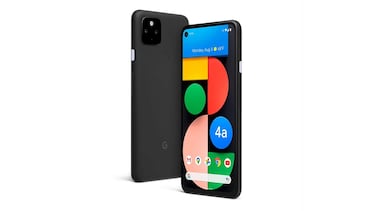
Google Pixel 4a 5G users on Android 11 have been reporting touchscreen issues following the December update, but the latest update has reportedly failed to resolve the issue. While Google had said last month that a fix for the issue will be included in the upcoming software update, users are claiming that the January update has not fixed the bug. The problem has been reported by several users and it seems to be mostly affecting the bottom part of the phone’s screen; it is said to become more prominent while using the three-button navigation.
Several Google Pixel 4a 5G users on Android 11 have been bringing up the issue on the Google Pixel support page. Google had responded on December 24, 2020, saying that the company was aware of the issue. It had promised a fix in the upcoming software update and also suggested ways to improve the responsiveness of the device.
The issue was first reported by Android Police. It now confirms that the January patch does not include a fix for it. Users on the support page have also said the same.
Google Camera 8.1 Update Disables Astrophotography on 2 Pixel Phones: Report
The touchscreen issue is particularly affecting those who have chosen the three-button navigation. The Google Pixel 4A 5G January update, however, does include some other bug fixes, including a fix for a speaker noise that occurred in certain scenarios.
Since the January update did not bring a fix for the touchscreen issue on Google Pixel 4A 5G, it is to be now expected in the February update. In the meantime, Google had suggested that Pixel 4A 5G users can try tapping the center of the button or the side of the button/ icon furthest away from the edge of the display while tapping on icons on the edge of the screen. Users were also advised to try using the tip of their finger or thumb while tapping icons, including the navigation buttons at the bottom of the screen. Google said that this could improve touch recognition.
Play video on original page
Promoted: In the Stores
Pre-Book Now
Samsung Galaxy S21 Ultra (12GB RAM, 256GB) – Pha
The community forum also included suggestions from other Google Pixel 4A 5G users, including reverting back to the November software. The other popular solution has been to switch from the three-button navigation system to gesture navigation.
WhatsApp vs Telegram vs Signal
Samsung Galaxy S21, Galaxy S21+, Galaxy S21 Ultra With 120Hz Displays Launched: Price, Specifications
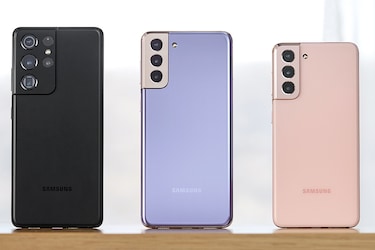
Samsung Galaxy S21 series is now official. After a plethora of leaks, rumours, and teasers, the new flagship range of smartphones have finally been launched by the South Korean giant at its Galaxy Unpacked 2021 event. The new series continues the company’s tradition of bringing three distinct models in its flagship smartphone series — just like the Galaxy S20 series launched last year. The Galaxy S21 family consists of the regular Galaxy S21 as well as the Galaxy S21+ and the Galaxy S21 Ultra. All three models come with an adaptive 120Hz refresh rate and flaunt an all-new camera housing that Samsung calls “Contour Cut Camera”. The Galaxy S21 and the Galaxy S21+ in the series share an identical triple rear camera setup, while the Galaxy S21 Ultra houses a superior, quad rear camera setup with a 108-megapixel primary sensor. The Galaxy S21 Ultra also comes with S Pen support. The entire Galaxy S21 series includes an IP68-rated for dust and water resistance.
Samsung Galaxy S21, Galaxy S21+, and Galaxy S21 Ultra price, availability details
Samsung Galaxy S21 price in India has been set at Rs. 69,999 for the base 8GB RAM + 128GB storage variant, while the 256GB storage option’s price tag is Rs. 73,999. The Samsung Galaxy S21+ starts at a price of Rs. 81,999 for the base 8GB RAM + 128GB storage option, with the price for the 8GB RAM + 256GB storage variant set at Rs. 85,999. The most premium Samsung Galaxy S21 Ultra starts at Rs. 1,05,999 for the base 12GB RAM + 128GB storage variant, with the top-end 16GB RAM + 512GB storage configuration priced at Rs. 1,16,999. It appears the 12GB RAM + 256GB storage variant hasn’t been brought to India.
Pre-orders start from January 15, and pre-order customers will get a Galaxy SmartTag, also launched at the event, and a Rs. 10,000 Samsung Shop voucher, redeemable against a Galaxy Watch Active 2 or a Galaxy Buds+ with a Travel Adapter. Cashback of up to Rs. 10,000 will be available for HDFC Bank customers. Pre-order customers get delivery from January 25, whereas regular sales start from January 29, via Samsung.com, Amazon India, and Flipkart, amongst other online portals, as well as via offline retail stores.
Samsung Reveals Exynos 2100 SoC Ahead of Galaxy S21 Series
In the US, the Samsung Galaxy S21 starts at $799 (roughly Rs. 58,500), whereas the Galaxy S21+ and Galaxy S21 Ultra come with a starting price of $999 (roughly Rs. 73,100) and $1,199 (roughly Rs. 87,700), respectively. The phones will go up for pre-orders from January 14, and on sale from January 29.
The Galaxy S21 and Galaxy S21+ both come in a new signature colour option called Phantom Violet, whereas the Galaxy S21 Ultra gets Phantom Titanium, Phantom Navy, and Phantom Brown colour options that will be exclusive to Samsung.com. Launched alongside the new smartphones were the Samsung Galaxy Buds Pro TWS earbuds and the Galaxy SmartTag.Samsung Galaxy S21 specifications
The Samsung Galaxy S21 runs on Android 11 with One UI on top and features a 6.2-inch Flat full-HD+ (1,080×2,400 pixels) Dynamic AMOLED 2X Infinity-O Display with a 20:9 aspect ratio and a 421ppi pixel density. The display also comes with HDR10+ certification, Samsung’s Eye Comfort Shield, and an adaptive 120Hz refresh rate that can drop to as low as 48Hz. Under the hood, the Galaxy S21 has an octa-core Exynos 2100 SoC in all markets (except in US where it comes with the Qualcomm Snapdragon 888), along with 8GB of LPDDR5 RAM.
Samsung’s R&D First Employee in India Explains How It Evolved
In terms of optics, the Samsung Galaxy S21 houses a triple rear camera setup that includes a 12-megapixel sensor with an ultra-wide-angle f/2.2 lens with a field-of-view (FoV) of 120 degrees. The camera setup also comes with a 12-megapixel primary Dual Pixel sensor with an f/1.8 lens that comes with autofocus support. Additionally, there is a 64-megapixel sensor with phase detection autofocus, hybrid optic 3x zoom, and FoV of 76 degrees through an f/2.0 lens. The tertiary sensor is also equipped with optical image stabilisation (OIS).
The Samsung Galaxy S21 features a 10-megapixel camera sensor at the front for selfies and video chats. The front-facing sensor is coupled with an f/2.2 lens that has FoV of 80 degrees.
Samsung has provided an upgraded camera app on the Galaxy S21 that supports features including 8K Snap, Director’s View, Super Steady Video, and Single Take. When paired with the new Galaxy Buds Pro, the phone is also capable of recording ambient sounds and your voice simultaneously using a pre-loaded multiple mic recording functionality. There is also an improved Space Zoom feature to let you digitally zoom an object or subject 30 times.
Qualcomm Brings New Ultrasonic Fingerprint Sensor With Larger Surface Area
On the storage part, the Samsung Galaxy S21 has 128GB or 256GB of onboard storage options. Connectivity options include 5G (NSA and SA both), 4G LTE, Wi-Fi, Bluetooth, GPS/ A-GPS, NFC, and USB Type-C port (with DisplayPort support). Sensors on board include accelerometer, ambient light sensor, barometer, geomagnetic sensor, gyroscope, and proximity sensor. The phone also comes with an all-new ultrasonic fingerprint sensor.
The Samsung Galaxy S21 packs a 4,000mAh battery that supports USB PD 3.0 fast charging. There is also Fast Wireless Charging 2.0 at 10W as well as Wireless PowerShare for reverse wireless charging. The phone measures 151.7×71.2×7.9mm and weighs 171 grams (mmWave) and 169 grams (Sub6).
Samsung Galaxy S21+ specifications
The Samsung Galaxy S21+ runs on One UI based on Android 11 and comes with a 6.7-inch Flat full-HD+ (1,080×2,400 pixels) Dynamic AMOLED 2X Infinity-O Display with a 20:9 aspect ratio and a 394ppi pixel density. The display also includes HDR10+ support as well as a 120Hz adaptive refresh rate and Eye Comfort Shield. There is the Exynos 2100 SoC on the global Galaxy S21+ version (Snapdragon 888 in the US), along with 8GB of LPDDR5 RAM. The triple rear camera setup of the Galaxy S21+ includes a 12-megapixel Dual Pixel primary sensor with an f/1.8 lens, 12-megapixel ultra-wide shooter, and a 64-megapixel telephoto shooter with OIS support. There is also a 10-megapixel selfie camera sensor.
Samsung Introduces a Programme to Give New Life to Your Old Galaxy Phone
The preloaded camera features on the Samsung Galaxy S21+ are identical to those available on the Galaxy S21. This means you’ll get the same Super Zoom, 8K Snap, and Director’s View, among other options.
The Samsung Galaxy S21+ comes in 128GB and 256GB of onboard storage options. Connectivity options include 5G, 4G LTE, Wi-Fi, Bluetooth, GPS/ A-GPS, NFC, and USB Type-C port. There is also Ultra Wideband (UWB) support.
Sensors on board include accelerometer, ambient light sensor, barometer, geomagnetic sensor, gyroscope, and proximity sensor. The phone also includes an ultrasonic fingerprint sensor.
Samsung has provided a 4,800mAh battery on the Galaxy S21+ that supports both fast wired and wireless charging, just like the Galaxy S21. Besides, the phone measures 161.5×75.6×7.8mm and weighs 202 grams (mmWave) and 200 grams (Sub6).
Samsung Galaxy S21 Ultra specifications
Just like the other two models in the series, the Samsung Galaxy S21 Ultra also runs on Android 11 with One UI on top. It, however, features an advanced 6.8-inch Edge QHD+ (1,440×3,200 pixels) Dynamic AMOLED 2X Infinity-O Display with HDR10+ support and a 120Hz adaptive refresh rate that can go down to 10Hz. The display of the Galaxy S21 Ultra is also equipped with Wacom’s technology to support S Pen. Users can get the note-taking experience by using an existing S Pen from their Galaxy Note or Galaxy Tab or can purchase an S Pen meant for the Galaxy S21 Ultra with a compatible case. The phone is powered by an octa-core Exynos 2100 SoC in global markets (Snapdragon 888 in the US), paired with 12GB and 16GB LPDDR5 RAM options.
On the camera part, the Samsung Galaxy S21 Ultra flaunts a quad rear camera setup that includes a 108-megapixel sensor with an f/1.8 lens and OIS support. The camera also carries a 12-megapixel Dual Pixel sensor with an f/2.2 lens, a 10-megapixel sensor with an f/2.4 telephoto lens and OIS support, and another 10-megapixel sensor with an f/4.9 telephoto lens and OIS support. The former telephoto lens supports 3x optical zoom, while the latter one has 10x optical zoom. There is also a laser autofocus sensor for enhanced results. Further, the camera supports 100X Space Zoom.
For selfies and video chats, the Samsung Galaxy S21 Ultra has a 40-megapixel camera sensor at the front, with an f/2.2 lens.The Samsung Galaxy S21 Ultra comes in 128GB, 256GB, and 512GB storage options. Connectivity options include 5G, 4G LTE, Wi-Fi 6E, Bluetooth, GPS/ A-GPS, NFC, and USB Type-C port. You’ll also get UWB support. Sensors on board include accelerometer, ambient light sensor, barometer, geomagnetic, gyro scope, hall, and a proximity sensor. There is also an ultrasonic fingerprint sensor.
Samsung has offered a 5,000mAh battery on the Galaxy S21 Ultra that supports USB PD 3.0 and Wireless Charging 2.0 for fast wired and wireless charging. The phone measures 165.1×75.6×8.9mm and weighs 229 grams (mmWave) or 227 grams (Sub6).
Samsung Galaxy S21 Series Fresh Teaser Offers a Sneak Peek at Camera, S Pen Support

Samsung Galaxy S21 series’ camera setup is seen in a fresh teaser video ahead of the January 14 Galaxy Unpacked 2021 event. The video also gives us a glimpse of the S Pen support that could be a part of the Galaxy S21 Ultra in the series. Separately, some purported press renders of the Galaxy S21 Ultra cases have surfaced online that suggest a dedicated room for the new S Pen stylus that could be available alongside the new phone. Earlier reports indicated that the stylus could be provided for purchase separately.
The 27-second teaser video shows the vertically aligned camera setup of the new flagship models that could debut under the Samsung Galaxy S21 series. The video also gives us a sneak peek of the back of the new phones that could feature a glass back. Towards the end, it suggests S Pen support that could be exclusive to the Galaxy S21 Ultra in the series.
“Now more than ever, we need smartphones that can help us express ourselves with stunning photos, deliver immersive viewing experiences, and simply make everything we do epic,” the company said on the Samsung US Newsroom site to tease the new flagship series.
In addition to the company’s official teasers, some press renders purportedly showing the Samsung Galaxy S21 Ultra cases have been published by WinFuture.de. The renders suggest that while the Galaxy S21 Ultra is not likely to include the S Pen holster, there could be specific cases with space for the stylus. We noticed that in a few purported renders of the Galaxy S21 Ultra in the past as well.
Samsung Galaxy Z Flip 3 Tipped to Have Similar Camera Design to Galaxy S21
Samsung Galaxy S21 Series Pre-Booking Freebies Include Phone Cover
Samsung Galaxy S21 Series Price Suggested by Belgian Carrier
Samsung is hosting the Galaxy Unpacked 2020 virtual event on Wednesday, January 14. The Galaxy S21 series alongside the Galaxy Buds Pro and Galaxy SmartTag are expected to debut at the event.
TCL Tab 10s and NXTPAPER Tablets, New TV Sets, OD Zero Mini-LED Technology Announced at CES 2021
TCL has announced a range of devices at CES 2021. This includes NXTPAPER and Tab 10s tablets, and TCL’s new Mini-LED, QLED and 4K HDR TV range. It also detailed on its Next-Gen OD Zero mini LED Technology that looks to be introduced in TVs later this year. Key specifications of the new TCL Tab 10s include MediaTek MT8768 SoC and a large 8,000mAh battery. TCL has also confirmed that a series of TCL Google TVs will be launched in 2021, starting in the US and later in other parts of the world.
TCL Tab 10s price, specifications
Starting with the TCL Tab 10s, the tablet is priced at EUR 199 (roughly Rs. 17,700) for the Wi-Fi model and EUR 249 (roughly Rs. 22,200) for the 4G model. It will be made available in Europe, North America, Middle East, Africa, China, Asia Pacific, and Latin America, and exact availability details will be announced in each region
Coming to specifications, the TCL Tab 10s runs on Android 10 and features a 10.1-inch full-HD (2,000×1,920 pixels) LCD display. It is powered by the MediaTek MT8768 SoC paired with up to 4GB of RAM and up to 64GB of storage. There is an 8-megapixel rear camera and a 5-megapixel front camera for optics and it packs a large 8,000mAh battery on board with 18W fast charging support. Connectivity options include USB Type-C port, Wi-Fi 802.11ac, Bluetooth v5, and more.
by TaboolaSponsored Links
This Germany hearing aid company is looking for 1000 people to try this device
TCL 20 5G, TCL 20 SE Phones, MoveAudio S600 TWS Earbuds Launched at CES
TCL NXTPAPER tablet price, specifications
The new TCL NXTPAPER tablet is priced at EUR 349 (roughly Rs. 31,100). It will be available in Europe, Middle East, Africa, Latin America, and Asia Pacific regions from April onwards. The biggest highlight is the NXTPAPER screen that was announced first at IFA last year. This display opts for a NCVM composite sheet instead of LCD to offer a paper-like thin display for optimal viewing experience. It has launched in a single Ultramarine Green colour.
tcl nxtpaper TCL NXTPAPERIt also runs on Android 10, is IP52 certified, and has an 8.88-inch (1,440×1,080 pixels) IPS display. The tablet is powered by the MediaTek MT8768E SoC paired with 4GB RAM and 64GB storage option. There’s microSD card support for storage expansion.
Samsung Launches SmartThings Cooking Service to Curate Meals at CES 2021
TCL’s NCTPAPER also includes an 8-megapixel rear camera and 5-megapixel front camera for selfies. It packs a 5,500mAh battery with 18W fast charging support. Connectivity options include 3.5mm audio jack, Wi-Fi 802.11ac, Bluetooth v5, and more.
TCL new Television range at CES 2021
At CES, TCL introduced the 4K Mini-LED TV C825, TCL 4K QLED TV C725, and TCL 4K HDR TV P725. The TCL 4K Mini-LED TV C825 features Quantum Dot display technology to offer better picture quality and has ultra-high targeted regional brightness for better visuals on screen. It supports Dolby Vision HDR imaging technology, Imax Enhanced, and Dolby Vision IQ as well. The C825 uses 120Hz MEMC and 120Hz low reverse display, supports four-way HDMI 2.1 port, VRR, ALLM, eARC, and WiFi 6. There’s also a magnetic split-type 4-megapixel web camera for video calls.
Advertisement
Coming to the TCL C725 QLED 4K TV, it also features the Quantum Dot display technology and offers nearly 100 percent ultra-high color gamut (DCI-P3). It supports Dolby Vision, Dolby Atmos immersive sound, and integrates an AiPQ Engine that brings real-time optimization for different entertainment or content genres. It also supports hands-free voice control 2.0, MEMC and HDMI 2.1.
Lenovo ThinkPad X1 Titanium Yoga, X12 Detachable, More Laptops Launched
Lastly, the TCL P725 4K HDR TV supports Dolby Vision, Dolby Atmos, and MEMC motion picture processing. It also comes with hands-free voice control 2.0 and runs on the Android TV platform. Pricing and availability of these TV sets will be announced closer to launch date.
TCL has also announced that it will roll out a series of TCL Google TVs in 2021, starting in the US and later in other parts of the world. These TV sets will come in Mini-LED, 8K, and QLED display technologies.
Advertisement
TCL OD Zero Mini-LED technology
At CES 2021, TCL also debuted its OD Zero Mini-LED technology that will be introduced in ultra-slim TCL TVs later this year. OD Zero is a technology that deploys Mini-LED backlight technology in a unique vertical manner to enable a slim profile on TV sets. Even with its slim form factor, OD Zero is said to outperform previous TCL Mini-LED technology.
TCL says OD Zero represents the optical distance between the Mini-LED backlight layer and the LCD display layer (diffuser plate). It has now been reduced to an astonishing 0mm, to create an ultra-thin backlight module. TCL OD Zero Mini-LED claims to offer new levels of HDR, richer colour, more depth details, and better precision in contrast control. This tech is said to provide brilliant whites alongside deep blacks.
WhatsApp vs Signal vs Telegram: Which is More Secure
Whatsapp currently is the largest messaging service in the world with over 2 billion monthly active users. Following that, Telegram accounts for 400 million and Signal stands at a ballpark of 10-20 million monthly active users. Simply looking at the raw numbers would suggest that WhatsApp is hugely by concerns over user data privacy, people have been turning to alternative messaging apps for increased security.
The second most popular messaging app Telegram and a new entrant Signal (which has been endorsed by Elon Musk) also offer some impressive secu
Whatsapp currently is the largest messaging service in the world with over 2 billion monthly active users. Following that, Telegram accounts for 400 million and Signal stands at a ballpark of 10-20 million monthly active users. Simply looking at the raw numbers would suggest that WhatsApp is hugely popular and almost ubiquitous while Telegram is catching up and Signal seems to have just joined the million downloads race. However, numbers do not often tell you the entire story, hence here we do a comprehensive comparison of the three app’s security and features.
Features:
Whatsapp
WhatsApp offers almost every feature you might need. You get support for group chats with up to 256 members. You can also broadcast messages to multiple contacts at the same time. It also supports voice and video calls, both for individuals and groups. However, for group video calls, you are restricted to 8 users at any time. Further, WhatsApp also offers a Status feature (also called WhatsApp stories) similar to Instagram stories.
Whatsapp also allows you to share all sorts of files and documents, but there are file size limits to adhere to. For photos, videos, and audio files, the limit is 16 MB. However, documents can be up to 100 MB. You can also share live location with your contacts and I am sure many users find this feature helpful.
And since WhatsApp is meant for general users, it offers seamless backup and restore functionality through cloud services like Google Drive and iCloud. And the best part is that cloud backup is completely free.
ADVERTISEMENT
Telegram
Telegram app offers so many features that it’s incredible. Similar to WhatsApp, you get the basics such as chats, group chats, and channels. However, unlike WhatsApp’s 256 member limit, Telegram brings support for groups with up to 200,000 members. It also offers multiple group-specific features such as bots, polls, quizzes, hashtags, and a lot more which can make group experiences a lot more fun.
The app also offers a unique feature, self-destructing messages (like Snapchat) which is great if you’re sending messages that you don’t want to remain on the recipient’s device for eternity. The size limit for sharing files on Telegram is a whopping 1.5 GB. The app now has both voice and video call on Android and iOS devices, which is great because video call support was a big omission from the app.
Signal
Signal offers its users secure messaging, voice, and video calls and all communications are end-to-end encrypted. Further, you can create groups, however, you don’t have the option to broadcast messages to multiple contacts at once. Plus, Signal has recently added support for group calling as well.
It has a feature similar to the self-destructing messages of Telegram. The best feature of Signal is “Note to Self”. Unlike WhatsApp, you don’t have to create a single-member group to send notes to yourself. On Signal, the feature is available natively and you can jot down your thoughts and ideas while messaging with your friends and family.
Apart from that, Signal allows you to relay voice calls to its servers so your identity remains concealed from your contacts. The feature is somewhat similar to what a VPN does. There are also emojis and some privacy stickers, but they are very limited in comparison to WhatsApp and Telegram.
Security:
Whatsapp
The end to end encryption (E2E) introduced in 2016 on WhatsApp is available on every single mode of communication that the app enables. So all your messages, video calls, voice calls, photos, and anything else you share are end-to-end encrypted. WhatsApp uses the E2E protocol developed by Open Whisper Systems, which is the name behind Signal messenger. That’s a good thing, because the Signal protocol is open source, widely peer-reviewed, and is generally considered one of the best protocols for implementing end-to-end encryption in messaging platforms.
However, WhatsApp does not encrypt backups (cloud or local). Also, it does not encrypt the metadata which is used to carry communication between two endpoints. This is one of the major criticisms of WhatsApp’s security model. While metadata does not allow anyone to read your messages, it lets authorities know whom and when you messaged someone, and for how long.
All in all, WhatsApp does a pretty decent job of ensuring security for its users. That being said, WhatsApp has suffered a couple of major privacy nightmares, especially the recent issue with group chats getting indexed on Google search. That issue has been fixed, however, it was not a good look for the messaging app.
ADVERTISEMENT
Telegram
Telegram does offer some level of protection to its users. While Telegram supports E2E encryption, it’s not enabled by default. The only way to use E2E encryption on Telegram is to use its secret chats feature. However, Telegram states that it manages its message storage and decryption keys in a way that one would require court orders from multiple legal systems around the world to be able to access any of your data. The company says that it has shared 0 bytes of data with third-parties and governments to this date.
Telegram groups are not encrypted because Secret Chats are only supported for single-user communication. Moreover, Telegram’s desktop client doesn’t support E2E encryption on any platform other than macOS.
Signal
Signal is by far the best when it comes to security, be it on the back-end or the user-facing side of the service. Signal uses the open-source Signal Protocol to implement end-to-end encryption. And just like WhatsApp, the E2E encryption covers all forms of communication on Signal.
Signal goes one step further than others and encrypts your metadata too. To protect user privacy from all corners, Signal devised a new way to communicate between the sender and the recipient and it’s called Sealed Sender. Basically, with Sealed Sender, no one will be able to know not even Signal who is messaging whom, which ensures ultimate privacy. Signal by default encrypts all the local files with a 4-digit passphrase. And if you want to create an encrypted local backup then you can do that as well. The app now also supports encrypted group calls.
All in all, in terms of security and privacy protection, Signal stands head and shoulder above WhatsApp and Telegram and that makes it the most secure messaging app between the three.
What data does each app collect?
Following is the list of data that each of the three messaging apps collects from their users:
WhatsApp
Device ID
User ID
Advertising Data
Purchase History
Coarse Location
Phone Number
Email Address
Contacts
Product Interaction
Crash Data
Performance Data
Other Diagnostic Data
Payment Info
Customer Support
Product Interaction
Other User Content
Telegram
Contact Info
Contacts
User ID
Signal
None. (The only personal data Signal stores is your phone number)
Google Pay now shows how much money you spent in 2020, here is how to check your spending habits
Google Pay users who mindlessly use the app to make payments and transactions are in for a surprise. It may or may not be sweet since the new tool will act as a reality check for some users who fail to keep track of their transactions. The new section, 2020 Rewind by the Unified Payment Interface (UPI) app is now showing how much money its users spent using the app in 2020. Google Pay is giving users insights into their spending habits of 2020.
The new section, 2020 Rewind is currently being displayed on the Google Pay app on Android and iOS as a banner. The rewind section gives insights into the number of days you have spent on the app. It also shows the badges a user has earned as well as spending categories and total rewards for the year.
It is fairly easy to access the Rewind 2020 button. Users have to simply open the Google Pay app > tap on the rewind button on the banner displayed at the top of the Google Pay app. It reads “Check out your 2020 summary.”
Alternately, users can access the rewind button by going to Promotions. The app displays the number of days for which a user has used the Google Pay app. Then tap on Start to Explore. The app then shows your activity, if you have interacted with local merchants, and the number of transactions you have made. It will also give information on how much money users have saved over the year via cashback. If you played Go India on the platform, Google Pay will give information on the number of cities you travelled to in the game.
 Tech with Prakalp