Oppo Aurora Purple colour variant leaked

HIGHLIGHTS:

  • Oppo A92 colour variant has been leaked along with the design.
  • According to Blass, A92 will come in a Aurora Purple colour.
  • The Oppo A92 was recently spotted on IMDA website.

Oppo was recently busy with multiple smartphone launches, including that of the A92s. The Chinese company is meanwhile working on a set of new A-series smartphones, and a variant of A92s is among them. Dubbed Oppo A92, the smartphone has been in the rumour mill for quite some time. Now, the press renders of the A92 have leaked, hinting at a design that looks more similar to the A72 than the A92s.

The renders were shared by Evan Blass on the membership platform Patreon and obtained by GSMArena. The Oppo A92 can be seen housing a single punch-hole on the display and an L-shaped camera alignment at the back. The back has a glossy finish, along with rays emerging from the camera module and ending on the panel’s boundary. The Oppo A92 can be seen in an Aurora Purple colour, but there could be more colour option. A previous render showed Oppo A92 with a lighter hue than the one Blass has leaked in photos.

Moreover, the Oppo A92 has a side-mounted fingerprint sensor on the power button. According to GSMArena, the Oppo A92 has similarities with the A72 and A92s, which is why it is safe to assume there will be an AMOLED display instead of an LCD one. Blass has leaked that the Oppo A92 will have a 6.5-inch display with a 1080p resolution. The smartphone will be powered by a Qualcomm Snapdragon 665 processor under the hood, paired with 8GB of RAM and 128GB of internal storage that can be expanded via microSD card. The same chipset powers the Oppo A72.

For photography, the Oppo A92 is said to come with a combination of four sensors at the back – a 48-megapixel main sensor, an 8-megapixel ultrawide sensor, a 2-megapixel depth sensor, and a 2-megapixel macro sensor. The same sensors are also found on the Oppo A72 and Oppo A92s, however, with a different setup at the back. The battery information of the Oppo A92 has not been shared along with the leak. But that should not remain a mystery for a long time.

The Oppo A92 recently visited the IMDA certification website bearing the model number OPPO CPH2059. This hints at an imminent launch in Singapore but its availability in India and other markets is still unknown. The pricing information of the Oppo A92 is also something that is unknown for now. But if we are to guess, the Oppo A92 could cost around $225 (roughly Rs 17,000), as per the GSMArena report.

iPhone 12 Pro massive leak confirms 120Hz display, bigger battery and new camera features

HIGHLIGHTS:

  • Apple’s iPhone 12 Pro is tipped to get a 120hz display
  • The iPhone 12 Pro is also expected to get new camera features and upgraded internals
  • There is also said to be a bigger battery on the iPhone 12

It is no secret that Apple is working on a new flagship range of smartphones for 2020. The phones are expected to launch later in the year flaunting a new design scheme and upgraded internals.

And now, we have more information about these phones which are expected to be launched later around September-October this year. The information comes courtesy of known tipster Max Weinbach, who has been quite accurate this year with his leaks.

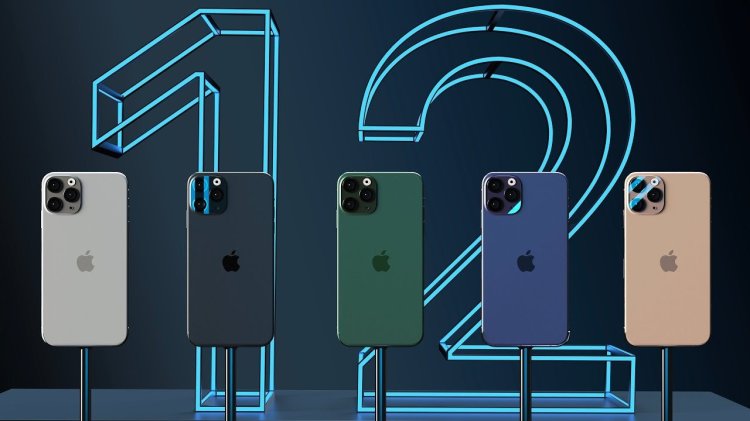
The new iPhones from Apple are tipped to come in multiple sizes, with a non-Pro 5.4-inch model, a non-Pro 6.1-inch model and a Pro 6.1-inch model and a Pro 6.7-inch model set to populate the list.

While we’ve previously been made aware that the displays will also differ from each other in technology — OLED vs LCDs. However, the new report now sheds further light on the features of the panels. According to the tipster, a key differentiator between the displays will be the refresh rate.

The iPhone 12 will get 120Hz ProMotion display, however, this feature is being tipped to be exclusive to the 6.1 and 6.7-inch iPhone 12 Pro phones. The report adds that the ProMotion screens will feature dynamic refresh rate switching allowing them to switch between 60Hz and 120Hz depending on the task at hand.

Apart from this, the tipster has also revealed that the iPhone 12 Pro models will also get a larger battery — as big as 4,400mAh — to handle the increased load caused by the faster refresh screen.

Continue reading “iPhone 12 Pro massive leak confirms 120Hz display, bigger battery and new camera features”

Vivo V19 With Dual Hole-Punch Selfie Cameras Set to Launch in India: Expected Price, Specifications

HIGHLIGHTS:

  • Vivo V19 India launch was initially scheduled for March 26
  • Vivo postponed the initial launch plan due to the national lockdown
  • Vivo V19 is powered by Qualcomm Snapdragon 712 SoC

Vivo V19 is set to launch in India on Tuesday, May 12. The new Vivo smartphone was originally planned to debut in the country on March 26, but the launch was delayed due to the coronavirus lockdown. However, since the government has eased e-commerce operations in certain regions and allowed offline retailers to resume their businesses in the country, the Chinese company has decided to bring the Vivo V19. The India version of the Vivo V19 will be different from the model that was launched in Indonesia in March, as per the early teasers.

Vivo V19 India launch details

The Vivo V 19 launch in India is finally taking place on Tuesday after initial delays due to the national lockdown. Unlike companies such as Realme and Xiaomi, Vivo isn’t hosting a live stream to announce the launch of the Vivo V19 in the country. You should, however, stay tuned to Gadgets 360 to get its timely details.

Vivo V19 price in India (expected)

The Vivo V19 price in India hasn’t yet been announced officially. Nevertheless, a previous report suggested that it would be around Rs. 25,000 for the base variant that will have 8GB of RAM and 128GB of onboard storage. The phone is also said to come in Mystic Silver and Piano Black colour options.

Vivo originally brought the V19 to the Indonesian market in March. However, the India variant will be different from the Indonesia model as it is already teased to come with a dual hole-punch selfie camera setup instead of the original single hole-punch selfie camera. The phone is likely to be what the Vivo global site revealed last month.

Vivo V19 specifications

As per the details revealed through the Vivo global site, the dual-SIM (Nano) Vivo V19 runs Android 10 with Funtouch OS 10 on top. It also features a 6.44-inch full-HD+ (1080×2400 pixels) Super AMOLED display with a 20:9 aspect ratio and an in-display fingerprint sensor. Under the hood, the phone has the octa-core Qualcomm Snapdragon 712 SoC, coupled with 8GB of RAM. There will be a quad rear camera setup that includes a 48-megapixel primary sensor, 8-megapixel ultra-wide shooter, and a 2-megapixel depth sensor. The camera setup also includes a 2-megapixel macro shooter.

Continue reading “Vivo V19 With Dual Hole-Punch Selfie Cameras Set to Launch in India: Expected Price, Specifications”

Redmi Note 9S vs Realme 6: Price, Specifications Compared

HIGHLIGHTS:

  • Redmi Note 9S is heavier than Realme 6
  • Redmi Note 9S has 5020mAh battery while Realme 6 has 4300mAh battery
  • Both the phones support fast charging option

Redmi Note 9S recently made its debut as the global variant of the Redmi Note 9 Pro smartphone. The smartphone will go head to head with Realme 6, which was also launched earlier this month. If case you are wondering how the two phones stack up against each other, at least on paper, we have made your job slightly easier. Read on for a quick comparison between Xiaomi’s Redmi Note 9S and Realme 6 smartphones in terms of their price and specifications.

Redmi Note 9S vs Realme 6: Prices and variants-
Both the Redmi Note 9Sand Realme 6 have a base 4GB + 64GB storage unit that is priced at RM 799 (roughly Rs. 13,700) and Rs. 12,999, respectively. The other – 6GB + 64GB and 8GB + 128GB – variants of Realme 6 are priced at Rs. 14,999 and Rs. 15,999, respectively.

Meanwhile, Redmi Note 9S’ 6GB + 128GB variant is up for grabs at RM 899 (roughly Rs. 15,000) which is further available in Aurora Blue, Glacier White, and Interstellar Grey colour options. The three variants of Realme 6 come in Comet Blue and Comet White colour shades.

Redmi Note 9S vs Realme 6: Specifications

In terms of the design, both Redmi Note 9S and Realme 6 smartphones have a hole-punch on the front panel and a quad camera setup on the back. The Redmi Note 9S, however, comes with a bigger screen size of 6.67-inch with full-HD+ (1,080×2,400) resolution along with Gorilla Glass 5 protection on top. In comparison, the Realme 6 features a 6.5-inch full-HD+ (1,080×2,400 pixels) display with Gorilla Glass 3 protection. Similarly, Redmi Note 9S is heavier (209 grams) than the Realme 6 smartphone (191 grams).

Continue reading “Redmi Note 9S vs Realme 6: Price, Specifications Compared”

WhatsApp this week: From Messenger Rooms to multi-device support, here’s what’s changed

WhatsApp is constantly upgrading its platform adding new features to its growing arsenal of features. This week, the company followed this trend and added new features to its platform.Facebook Chief Executive Officer Mark Zuckerberg last month announced that a new Messenger Rooms feature would soon be coming to Messenger and this feature would allow users to communicate with Instagram and WhatsApp users without leaving these apps. Last week we saw that Facebook was working on bringing Messenger Rooms integration to WhatsApp’s Android based app. This week the company brought the support for the same to WhatsApp Web.According to WABetaInfo, the blog that tracks development in the popular messaging app, the company is working on the feature in the version 2.2019.16 of WhatsApp Web. The Messenger Rooms shortcut will be available under the Contacts option in the drop down menu on the top of the chat window.Apart from this, Facebook is also working on bringing multi-device support to the app. This feature has been under development for quite sometime now. This week, the company made some tweaks to the feature. As per the blog site, WhatsApp will recommend using a Wi-Fi connection to log into a new device, which will most likely the app in syncing users’ data on various devices.It is worth noting that these features are still under development and haven’t been released on the main app yet. We’ll update you as soon as we have more information about these features
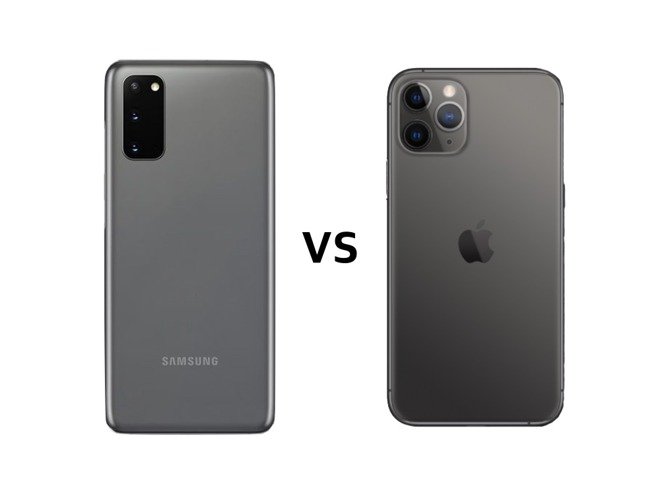
Samsung Galaxy S20+ vs iPhone 11 Pro Camera Shootout: Which Phone Gives You Better Photos?

HIGHLIGHTS:

  • The Galaxy S20+ features a total of 30x zoom
  • The iPhone 11 Pro is still one of the best phones for video
  • Both smartphone are the flagships of their respective brands
If you’d asked us a few months ago to pick one smartphone which had the absolute best cameras, the iPhone 11 Pro would have been an easy recommendation. It might not have a lot of the fancy shooting modes that its Android counterparts do, but when it comes to pure image and video quality, it’s definitely been the most consistent so far. Last year, we pitted it against Samsung’s finest — the Galaxy Note 10+ — and it managed to win the majority of our tests.

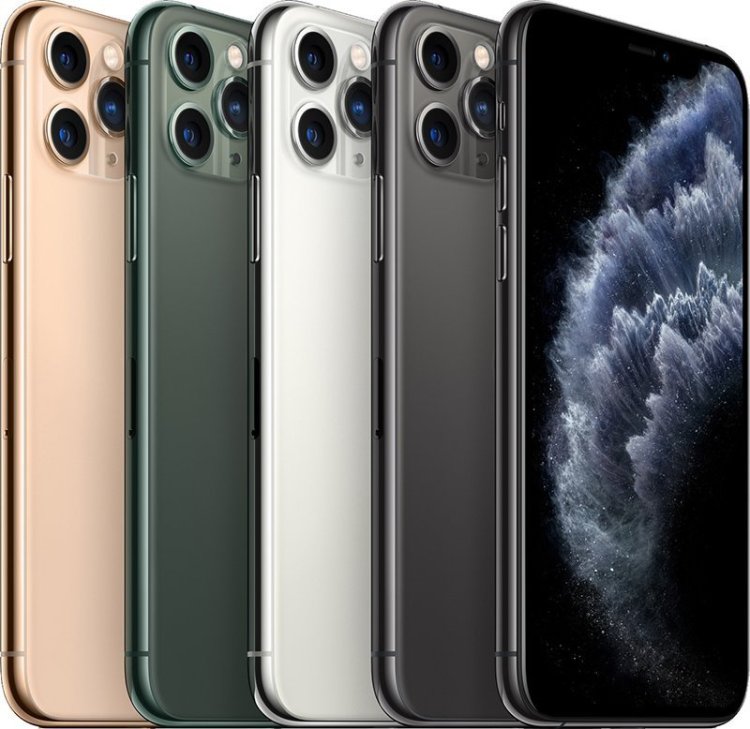
This year, Samsung is going all-out on its camera technology with the new Galaxy S20 series. We’ve already seen some of the great things that the cameras of the Galaxy S20+₹ 77,900 are capable of in our full review of the smartphone, but does this phone capture better images and videos than the iPhone 11 Pro? Of course, Apple doesn’t release new flagships twice a year like Samsung, so the iPhone 11 Pro is somewhat older. It’s still Apple’s flagship though, and has not fallen in price since its launch.

Today, we’ll be comparing the Galaxy S20+ to the iPhone 11 Pro in our usual series of tests. The aim is to see which phone manages to deliver the most consistent camera performance with photos as well as videos. Is Samsung’s new camera tech better than Apple’s finest offering? It’s time to find out.

Camera specifications and features –

Before we dive in, here’s a quick comparison of some of the main specifications of the cameras of both smartphones. Both have the same number of front and rear cameras, except that the Galaxy S20+ has an additional depth sensor at the back. Samsung has revamped its camera sensors from the previous generation, with some notable changes. The primary sensor still has a 12-megapixel resolution but it lacks the dual-aperture feature which had been a staple of Samsung flagships for a couple of generations. The wide-angle sensor also has a lower resolution now, but perhaps the most interesting change is the new 64-megapixel telephoto camera.

Samsung has coined the term ‘Space Zoom’ to describe the 3x “hybrid optical zoom” and up to 30x “super resolution zoom” that the Galaxy S20+ can achieve. We’ll go into more details about this in the respective section ahead, but on paper, the Galaxy S20+ already has a far superior zoom capability that the iPhone 11 Pro. Other areas where Samsung pulls ahead are its ability to record 8K video, super slow-motion video at 960fps, and the many shooting modes on offer.

Apple has taken a simpler approach with the iPhone 11 Pro, offering the basic shooting modes which we’ve see on previous models too, but with the addition of an always-on Night mode. With iOS 13.2, Apple also introduced Deep Fusion on the iPhone 11 series, which uses the custom-designed A13 Bionic processor’s neural engine to enhance photos, similar to what Google’s been doing with its Pixel phones.

With this out of the way, it’s time to head to the tests and see which phone does a better job.

Samsung Galaxy S20+ vs iPhone 11 Pro landscape test-

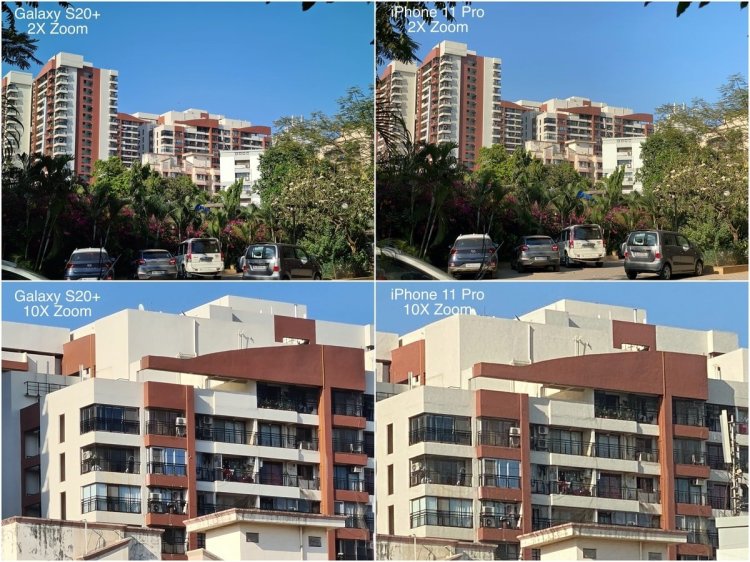
In our first test, we have a landscape shot of a nearby building. Both smartphones capture excellent details on the building and the trees in the foreground. However, we prefer the shot taken with the iPhone 11 Pro, simply because the exposure is more balanced and colours are more natural. The shot from the Galaxy S20+ is brighter but the texture on the building surface is blown out and the sky is a little unnaturally blue. It looks striking, no doubt, but it’s not the best.

Apple has taken a simpler approach with the iPhone 11 Pro, offering the basic shooting modes which we’ve see on previous models too, but with the addition of an always-on Night mode. With iOS 13.2, Apple also introduced Deep Fusion on the iPhone 11 series, which uses the custom-designed A13 Bionic processor’s neural engine to enhance photos, similar to what Google’s been doing with its Pixel phones.

With this out of the way, it’s time to head to the tests and see which phone does a better job.

Samsung Galaxy S20+ vs iPhone 11 Pro landscape test-

In our first test, we have a landscape shot of a nearby building. Both smartphones capture excellent details on the building and the trees in the foreground. However, we prefer the shot taken with the iPhone 11 Pro, simply because the exposure is more balanced and colours are more natural. The shot from the Galaxy S20+ is brighter but the texture on the building surface is blown out and the sky is a little unnaturally blue. It looks striking, no doubt, but it’s not the best.

Credit: Prakalp Bhardwaj

Google Duo adds Family Mode, web-based calls, other features to be rolled out soon

HIGHLIGHTS:

  • Google Duo has added family mode to its interface for a more personalised chat with family members.
  • The family mode can be made livelier by using AR effects and doodle options.
  • Other features like making calls by just using email addresses or via sending a link will be rolled out soon.

The pandemic period has seen the rise of many video conferencing apps. Google Duo has upped its game by introducing the family mode and other features to make video chats with loved ones livelier.

The family mode lets users interact with their family members and friends in a more informal way.

This comes along with AR features where filters can be used. The option to doodle while the conversation is still going on is also made available on the app. Users can also virtually dress up with masks and filters. These are also available for one-on-one users.

Google Duo has also come with a special effect for Mothers’ Day.

The feature is available for both iPhone and Android users and is end to end encrypted, the blog noted.

“Although the physical separation has been hard for all of us, Google Duo makes it easier to let family know how much we miss them, show off our latest artwork and just act silly together like we would in person,” Humberto Castaneda Product Manager, Google Duo noted in a blogpost.

The interface hides the hang-up and mute buttons so that kids don’t accidentally hang up family calls.

Formerly, Duo was meant only for one-on-one chats but only last month, it increased its limit for users to 12.

Jane Manchun Wong, a reverse engineering expert tipped off the launch for the potential upcoming feature on Twitter.
Wong posted an image on Twitter which showed Duo’s feature “Reachable with an email address” toggle on the Google Duo app.

Google has confirmed that it is in fact, testing the feature with Google Duo. People can now make video calls by just using email ids. It is likely to be rolled out in the coming weeks.

Continue reading “Google Duo adds Family Mode, web-based calls, other features to be rolled out soon”

WHO Readies Coronavirus App for Checking Symptoms, Possibly Contact Tracing

HIGHLIGHTS:

  • WHO’s app being made by Google, Microsoft veterans
  • The app will be released worldwide
  • It will include features around checking COVID-19 symptoms

The World Health Organization (WHO) plans to launch an app this month to enable people in under-resourced countries to assess whether they may have the novel coronavirus, and is considering a Bluetooth-based contact tracing feature too, an official told Reuters on Friday. The app will ask people about their symptoms and offer guidance on whether they may have COVID-19, the potentially lethal illness caused by the coronavirus, said Bernardo Mariano, chief information officer for the WHO. Other information, such as how to get tested, will be personalized according to the user’s country.

Though the WHO will release a version on app stores globally, any government will be able to take the app’s underlying technology, add features and release its own version on app stores, Mariano said in a phone interview.

India, Australia, and the United Kingdom already have released official virus apps using their own technology, with common features including telling people whether to get tested based on their symptoms and logging people’s movements to enable more efficient contact tracing.

Continue reading “WHO Readies Coronavirus App for Checking Symptoms, Possibly Contact Tracing”

iPhone SE (2020) Teased to Release in India Soon, Flipkart Opens Registrations

HIGHLIGHTS:

  • Flipkart recently started selling non-essential goods in select areas
  • Apple has started teasing the arrival of iPhone SE (2020)
  • iPhone SE (2020) will be available in three colour options

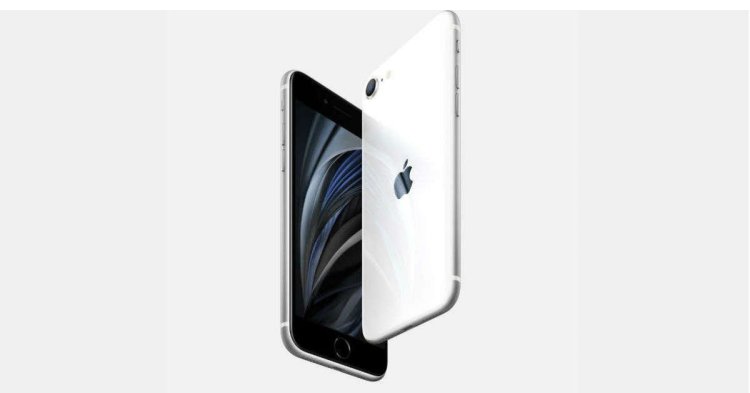
iPhone SE (2020) was unveiled last month, and this “affordable” new offering from Apple is priced in India starting at Rs. 42,500. India availability and sale details were not announced at the global launch of the phone, given the lockdown restrictions, but e-retailer Flipkart has now started teasing the phone’s arrival.

The e-commerce giant has started taking registrations of interest for the new iPhone SE. A new Apple banner is showing up inside the Flipkart app, and the iPhone SE (2020) is listed as ‘coming soon’.Gadgets 360 has spotted this new iPhone SE (2020) banner on the Flipkart app, and users can register to get notified about iPhone SE (2020) India sale details. The e-commerce giant asks for your email ID and phone number to get notified. Flipkart recently started selling non-essential items in green and orange zones in the country.

Also see: iPhone 12 phones are rumoured to come with sub-6GHz 5G technology

In red zones, online selling is still restricted to essential goods only. Now that restrictions have been partially relaxed, Apple may be looking to start selling the newly launched iPhone SE (2020) in India soon.To recall, the iPhone SE (2020) was launched last month with a price tag set at Rs. 42,500 for the 64GB storage variant, at Rs. 47,800 for 128GB storage variant, and at Rs. 58,300 for the 256GB storage variant.

It will be available in the country in Black, White, and PRODUCT (RED) colour options. While Flipkart availability has been confirmed, there is no word on where else the phone will be sold. Flipkart is calling it a “Flipkart Unique” product, suggesting that Flipkart may exclusively carry the phone online.

iPhone SE (2020) specifications, features
The iPhone SE (2020) runs on iOS 13, and features a 4.7-inch Retina HD (750×1334 pixels) IPS LCD display with True Tone tech and Haptic Touch support. It is powered by the Apple A13 Bionic chip. The phone has a single 12-megapixel camera sensor (f/1.8 aperture + OIS) at the back along with a LED True Tone flash. Camera features include 4K video at 60fps, Portrait mode, and Smart HDR. For selfies and video chat, there is a 7-megapixel camera at the front, with f/2.2 aperture.Connectivity options on the iPhone SE (2020) include 4G VoLTE, Wi-Fi 802.11ax, NFC, Bluetooth v5.0, GPS/ A-GPS, and a Lightning port. It lacks a 3.5mm audio port, but offers IP67 water and dust resistance, and comes with Touch ID support.

The phone measures 138.4×67.3×7.3mm and weighs 148 grams. The iPhone SE (2020) is said to last about as long as the iPhone 8, with up to 13 hours of video playback time, and 40 hours of audio playback time.

Google launches Read Along app to help kids learn and read better

HIGHLIGHTS:

  • Google announced a learning app for kids called the Read Along, an app designed especially for children above 5 years.
  • The Read Along was first launched in India as “Bolo”. The thunderous response from the parents in India led to the global launch
  • Read Along by Google is now available in over 180 countries and in nine languages including Hindi, English, Spanish and Portuguese.

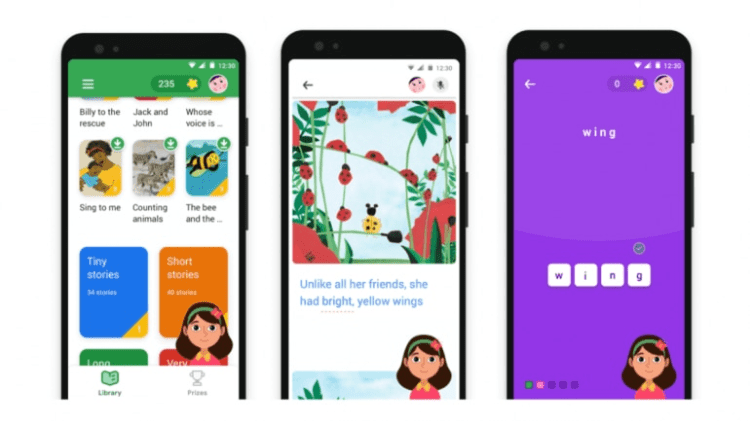
With one-third of the world under lockdown, Google has the perfect solution to keep the kids engaged at home. On Thursday, the tech giant announced a learning app for kids called the Read Along, an app designed especially for children above 5 years. The app would help the kids read and learn better and it would also provide verbal and visual feedback to them.Google CEO and Founder Sundar Pichai announced the app on Twitter and said, “Happy to share that Read Along, our app to help kids grow their reading skills is now available in 9 languages across 180+ countries. Powered by #GoogleAI text-to-speech & speech recognition, it gives verbal & visual feedback as kids read stories out loud.”

Also see: Google Drive app for iOS, iPadOS gets Privacy screen feature

The Read Along was first launched in India as “Bolo”. The thunderous response from the parents in India led to the global launch. Read Along by Google is now available in over 180 countries and in nine languages including Hindi, English, Spanish and Portuguese.“Read Along helps kids independently learn and build their reading skills with the help of an in-app reading buddy named Diya. As kids read out loud, Diya uses Google’s text-to-speech and speech recognition technology to detect if a student is struggling or successfully reading the passage. She gives them positive and reinforcing feedback along the way, just as a parent or teacher would. Children can also tap Diya at any time for help pronouncing a word or a sentence,” Zohair Hyder, Engineering Lead, Google said in a blog post.This app can be of great help to parents who are struggling to keep their kids engaged. It is an interactive app that can teach new things to the children as Google plans to add a variety of books and features to the app. Kids will get stars and badges as they learn and that would encourage them to read and play more on the app.

“Parents can create profiles for multiple readers, who tap on their photo to learn at their own pace and to track their individual progress. Read Along will personalize the experience by recommending the right difficulty level of stories and games based on their reading level performance,” Hyder wrote.Google has paid utmost importance to the safety and privacy of the children who use the app. The app will not get any ads or in-app purchases. Once you download the app, you won’t need any wifi connection or mobile data to use the app hence it will not give any unsupervised access to the internet and everything can well be under parental control.

Design a site like this with WordPress.com
Get started