Fitbit Heart Study Starts to Test if Devices Can Detect Irregular Heart Rhythms

HIGHLIGHTS:
  • Fitbit had said it will develop a method to detect irregular heartbeat
  • The hardware to detect irregular beats is present in Fitbit’s devices
  • Fitbit is being acquired by Google for $2.1 billion

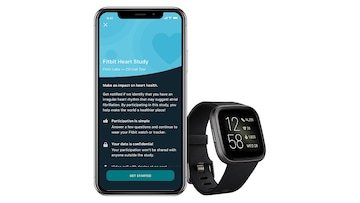
Fitbit on Wednesday launched a virtual study to test if its wearable devices can detect irregular heart rhythms or atrial fibrillation.The hardware to detect irregular beats is present in Fitbit’s devices, but is not available to consumers. Device users who enrol in the study will be allowed to test it in order for Fitbit to seek regulatory review.Fitbit, which is being acquired by Google-parent Alphabet, said in October that it planned to develop a method to detect irregular heartbeats that would match the feature available on rival Apple Watch.At the time, Fitbit said it would partner with the Bristol-Myers Squibb-Pfizer Alliance on how to communicate with patients about the condition, but did not say when it would begin trials to gain approval from health authorities in the United States and elsewhere for its detection algorithm.Fitbit said the study announced Wednesday will fill that purpose and generate data for its regulatory submissions around the world. The study will be led by Steven Lubitz, a cardiologist at Massachusetts General Hospital and associate professor of medicine at Harvard Medical School.The Fitbit Heart Study is open to individuals in the United States who are over 22 years of age and own Fitbit devices that can track heart rates, such as the Ionic (Review) and Versa (Review) models. Fitbit aims to enrll hundreds of thousands of people for the study.Atrial fibrillation, the most common form of heart rhythm irregularity, increases the risk of stroke and is usually prevalent among people above 65 years.

Vivo Y30 to be launched with 5000 mAh battery

HIGHLIGHTS:

  • Vivo Y30 comes in two colour options
  • The smartphone has a single, 128GB of onboard storage
  • Vivo Y30 packs a 5,000mAh battery

Vivo Y30 has debuted as the latest smartphone in the company’s Y series. While Vivo is yet to launch the new smartphone through its official channels, a listing has surfaced on a Malaysian online store to confirm the existence of the Vivo Y30 along with its specifications and pricing details. The new smartphone comes with a hole-punch display, which the company calls the “Ultra O Screen” design. The Vivo Y30 also has quad rear camera setup, including a depth sensor.

Vivo Y30 price, availability details

The Vivo Y30 price is set at MYR 899 (roughly Rs. 15,800) for the lone 128GB storage variant, as featured on the Lazada Malaysia website. The smartphone comes in Dazzle Blue and Moonstone White colour options. Moreover, it is scheduled to launch in the Malaysian market on May 9.

Vivo Y30 specifications, features

The dual-SIM (Nano) Vivo Y30 runs Android 10 with Funtouch OS on top and features a 6.47-inch HD+ (720×1560 pixels) display with a 19.5:9 aspect ratio. Under the hood, the phone has the octa-core MediaTek Helio P35 (MT6765) SoC, paired with 4GB of RAM. The quad rear camera setup on the Vivo Y30 has a 13-megapixel primary sensor with a regular f/2.2 lens and an 8-megapixel secondary sensor with an ultra-wide-angle f/2.2 lens. The camera setup also has a 2-megapixel depth shooter with an f/2.4 aperture and another 2-megapixel shooter with an f/2.4 aperture.

For selfies, the Vivo Y30 has an 8-megapixel camera sensor at the front. The front-facing sensor supports artificial intelligence (AI) backed features.

The Vivo Y30 has 128GB of onboard storage. Connectivity options on the phone include 4G LTE, Wi-Fi, Bluetooth v5.0, GPS/ A-GPS, FM radio, USB 2.0, and a 3.5mm headphone jack. There is also a fingerprint sensor at the back. Besides, the phone packs a 5,000mAh battery and weighs 197 grams.

Realme Narzo 10, Narzo 10A Now Set to Launch in India on May 11

HIGHLIGHTS:

  • Realme Narzo 10 and Narzo 10A launch will take place through a video
  • Realme last time planned to launch its Narzo phones on April 21
  • Realme Narzo phones are expected to come with MediaTek SoC
  • Realme Narzo 10 and Narzo 10A will come with multiple rear cameras

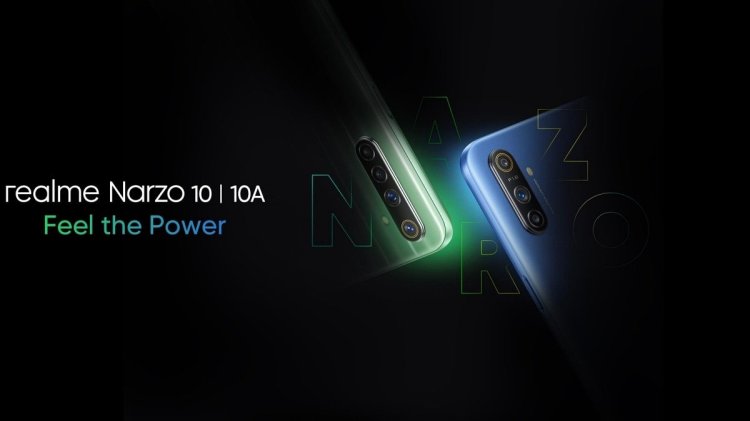
Realme Narzo 10 and Narzo 10A are set to launch in India on May 11, the Chinese company revealed, sending invites to the media. The new launch schedule comes just days after the government brought some relaxations to the national lockdown that is in place until May 17 to limit the spread of coronavirus in the country. Both new Narzo-series phones will come with multiple rear cameras and are touted to include a “remarkable battery”. The Realme Narzo 10 in the series was also recently teased to debut with a 48-megapixel primary camera. The phone was originally supposed to launch in India on March 26, but had to be delayed due to the ongoing pandemic.

Realme Narzo 10, Narzo 10A India launch details:

The official invite sent by Realme shows that the launch will take place at 12:30pm IST on May 11. Realme has also separately publicised the livestream link through its official Twitter account.

Initially, Realme had planned to launch the Narzo 10 and Narzo 10A phones on March 26. The company, however, delayed its original plan due to the lockdown that was imposed on March 24. It then rescheduled the launch for April 21, but that plan was also postponed since e-commerce restrictions in the country weren’t eased at that time.

Realme will host the launch through a pre-recorded launch video. The company has said that it had “taken all the health and safety measures while recording the video” in its own office.

Realme Narzo 10 and Narzo 10A launch will take place through a video
Realme last time planned to launch its Narzo phones on April 21
Realme Narzo phones are expected to come with MediaTek SoC
Realme Narzo 10, Narzo 10A Now Set to Launch in India on May 11
Realme Narzo 10 and Narzo 10A will come with multiple rear cameras

Realme Narzo 10 and Narzo 10A are set to launch in India on May 11, the Chinese company revealed, sending invites to the media. The new launch schedule comes just days after the government brought some relaxations to the national lockdown that is in place until May 17 to limit the spread of coronavirus in the country. Both new Narzo-series phones will come with multiple rear cameras and are touted to include a “remarkable battery”. The Realme Narzo 10 in the series was also recently teased to debut with a 48-megapixel primary camera. The phone was originally supposed to launch in India on March 26, but had to be delayed due to the ongoing pandemic.

Realme Narzo 10, Narzo 10A India launch details
The official invite sent by Realme shows that the launch will take place at 12:30pm IST on May 11. Realme has also separately publicised the livestream link through its official Twitter account.

Get ready to #FeelThePower.
Unleashing the bold and the unique, #realmeNarzo10 and #realmeNarzo10A!
Launching at 12:30 PM, 11th May on our official channels.
Know more: https://t.co/hQGc0tJYkA pic.twitter.com/BiPjOCI5fs

Initially, Realme had planned to launch the Narzo 10 and Narzo 10A phones on March 26. The company, however, delayed its original plan due to the lockdown that was imposed on March 24. It then rescheduled the launch for April 21, but that plan was also postponed since e-commerce restrictions in the country weren’t eased at that time.

Realme will host the launch through a pre-recorded launch video. The company has said that it had “taken all the health and safety measures while recording the video” in its own office earlier.

Realme Narzo 10, Narzo 10A price in India
Pricing details of the Realme Narzo 10 and Narzo 10A are yet to be revealed officially. Nevertheless, a tipster in March indicated that the Realme Narzo 10 in the series will be available at a price tag of under Rs. 15,000. The phone is believed to be a rebranded variant of the Realme 6i that was launched in Myanmar with a starting price of MMK 249,900 (roughly Rs. 13,600). The Realme Narzo 10A, on the other hand, is said to be a rebranded version of the Realme C3 that was launched in Thailand with a different hardware than what debuted in India. The Thailand version of the Realme C3 was priced at THB 3,999 (roughly Rs. 9,400) for the 3GB RAM + 32GB storage model. This is likely to be similar to pricing of the Realme Narzo 10A in India.

Realme Narzo 10 specifications (expected)
As per the teasers and leaks emerged online, the Realme Narzo 10 would come with a 6.5-inch HD+ (720×1,600 pixels) display, MediaTek Helio G80 SoC, and up to 4GB of RAM. The smartphone is also expected to come with a quad rear camera setup, with the 48-megapixel primary sensor. Further, it could offer a 16-megapixel selfie camera. The smartphone is also already confirmed to have a 5,000mAh battery.

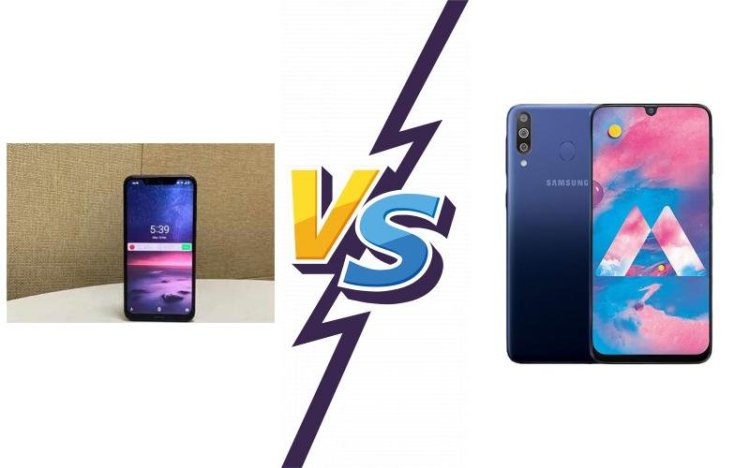
Comparison between Nokia 8.1 and Samsung Galaxy M30s

Hey, readers today I am going to do comparison between Nokia 8.1 and Samsung Galaxy M30s .

Nokia 8.1 :

1. Display-

  • Good with 3 star rating.
  • Size- 6.18 inches (15.7cm)
  • Screen Resolution- 1080×2246
  • Aspect Ratio- 18.6:9
  • Bezel less display- With notch
  • Pixel Density- 403ppi
  • Display Type – IPS LCD

2. Storage –

  • Best in class with 5star rating
  • Internal memory-64 GB
  • Expandable memory-400 GB
  • User Available Storage – Upto 50.3 GB
  • USB OTG Support- N/A

3. Camera –

  • Excellent with 4.5 star rating.
  • Camera Setup – Dual
  • 12MP+13MP (Primary)
  • 20MP (Front)

4. Battery –

  • Very good with 4 stars rating.
  • Capacity- 3500 mAh
  • Type – Li-ion
  • User Replaceable – No
  • Quick Charge- Fast

5. Performance –

  • Very good with 4 star rating
  • Chipset- Qualcomm Snapdragon 710
  • Processor- Octa Core
  • Architecture- 64bit
  • Graphics- Adreno 616
  • RAM -4 GB
  • Bootup Time – N/A

Samsung Galaxy M30s:

1. Display-

  • Very good with 4 star rating.
  • 6.4 inches (16.26 cm)
  • Screen Resolution- 1080×2340 pixels
  • Screen Ratio – 19.5:9
  • Bezel less display- With waterdrop notch
  • Pixel Density- 403ppi
  • Display type- Super AMOLED
  • Refresh Rate – N/A

2. Storage –

  • Best in class with 5 star rating.
  • Internal Memory- 64 GB
  • Expandable Memory- 512GB
  • User Available Storage- Upto 50 GB
  • USB OTG Support- ✓

3. Camera –

  • Very Good Camera with 4 star rating
  • Camera Setup- Triple
  • 48MP+8MP+5MP(Primary)
  • 16MP (Front)

4. Battery-

  • Excellent battery with 4.5 stars
  • Capacity- 6000mAH (49hr talk on 4G network)
  • Type- Li-ion
  • User Replaceable- No
  • Quick Charge – Fast

5. Performance-

  • Very good with 4 star rating.
  • Chipset- Samsung Exynos 9 Octa 961
  • Processor- Octa Core
  • Architecture- 64 bit
  • Graphics- Mail-G72 MP3
  • RAM – 4 GB
  • Bootup Time – 22.0 s

So , here I had given you comparison between both of the phones after all this one the basis of all the final result is that Nokia 8.1 stands with 4 star rating and Samsung Galaxy M30s with 4 star rating according to experts.

Price of Nokia 8.1 is about Rs.18,000 and of Samsung Galaxy M30s is about Rs.14,000.

I hope you would like my post.

Please like, share and follow

Credits: Prakalp Bhardwaj

Huawei MatePad T8 launched

HIGHLIGHTS:
Huawei MatePad T8 has an 8-inch HD+ display
The tablet is powered by the MediaTek MTK8768 SoC
Huawei MatePad T8 packs up to 32GB of internal storage
Huawei MatePad T8 With 5,100mAh Battery Launched: Price, Specifications
Huawei MatePad T8 will go on sale in a single Deep Sea Blue option

Huawei Matepad T8 has been launched in Romania, alongside the Huawei Y5p and Huawei Y6p phones. The budget-friendly tablet comes in a single Deep Sea Blue colour option and has a traditional design aesthetic. It has thick bezels on all sides, with more significant ones on the top and bottom portions of the display. There is a single camera at the back with no fingerprint sensor support in sight. Few specifications of the MediaPad T8 tablet are known at the moment as availability is set for next month.

Huawei MatePad T8 price, availability
The Huawei MatePad T8 is priced at RON 500 (roughly Rs. 8,400) in Romania, and is slated to be available next month, Romanian sites Mobzine and Mobilissimo report. The tablet is offered in a single Deep Sea Blue colour option.

Huawei MatePad T8 specifications
As for specifications, the Huawei MatePad T8 runs on Android-based EMUI 10 that offers smart functions for ease in navigation and usage. It comes with four modes for eye protection for safer use by children. It features an 8-inch HD+ (800×1260 pixels) display and an 80 percent screen-to-body ratio. The tablet is powered by the MediaTek MTK8768 octa-core processor paired with 2GB of RAM. Internal storage options include 16GB and 32GB, and there is support for additional storage expansion via a microSD slot.

Huawei MatePad T8 Summary

Huawei MatePad T8 tablet was launched on 6th May 2020. The tablet comes with a 8.00-inch touchscreen display with a resolution of 800×1260 pixels. Huawei MatePad T8 is powered by an octa-core MediaTek MTK8768 processor. It comes with 2GB of RAM. The Huawei MatePad T8 runs Android and is powered by a 5100mAh battery.

As far as the cameras are concerned, the Huawei MatePad T8 on the rear packs a rear camera. It sports a camera on the front for selfies.

The Huawei MatePad T8 runs EMUI 10 based on Android and packs 16GB of inbuilt storage that can be expanded via microSD card. It was launched in Deep Sea Blue colour.

Connectivity options on the Huawei MatePad T8 include Wi-Fi and GPS.

Honor X10 with 5G support confirmed to launch on May 20th

HIGHLIGHTS:
  • Honor confirmed last month that its upcoming handset will be called Honor X10
  • The handset has been confirmed to feature 5G support
  • Earlier leaks suggest Honor X10 will come with Kirin 820 5G chipset

Honor last month confirmed that its upcoming smartphone will be called Honor X10 and not Honor 10X but unfortunately the brand did not reveal the launch date for the handset. However, that changes today as Honor has officially confirmed that the Honor X10 will be launched on May 20th and that the handset will feature support for 5G as well. The company made the announcement on Weibo and while the teaser poster doesn’t reveal any other information apart from 5G support, earlier leaks have spilled some beans on what the handset might bring along with it. Some of the interesting leaked specifications regarding the handset include Kirin 820 5G chipset and a 6.6-inch full-HD+ IPS LCD display with 120Hz refresh rate. The Honor X10 has been tipped to feature a 4,200mAh battery with 22.5W fast-charging support. On the software side, you can expect the phone to boot Android 10 OS with custom UI on top. While details about optics are scarce at the moment, the Honor X10 is said to pack at least triple cameras on the back.

Interestingly, leaks and rumours have also suggested that the Honor X10 might be launched alongside the Honor X10 Pro by the company. The Pro model has been suggested to come with the flagship-end Kirin 985 SoC. As you might have guessed already, the Pro variant is also expected to feature 5G connectivity. As far as pricing is concerned, the pricing for Honor X10 is said to start from RMB 2,000 (roughly Rs 21,500). As we approach the launch, you can expect more details to leak along the way.

Key Specs

Honor 10X
HiSilicon Kirin 820 5G | 4 GBProcessor
6.63 inchesDisplay
48 MP + 8 MP + 2 MP + 2 MPRear camera
16 MPSelfie camera
4200 mAhBattery

Google Drive Brings Face ID, Touch ID Security for iOS, iPadOS Apps

HIGHLIGHTS:
  • Google Drive app for iOS, iPadOS gets Privacy screen feature
  • You can enable requiring Face ID or Touch ID
  • The authentication will be required while opening the app

Google Drive has added a Privacy Screen feature for its iOS and iPadOS apps. It is aimed at keeping your files secure by allowing you to require Face ID or Touch ID when launching the app. Earlier, there was no such layer of protection for the app. The new feature for the iPhone and the iPad app has been rolled out in the last few days and it is available in India as well. The feature was first announced last month, according to a report.

Google Drive’s new feature restricts access to the app using Face ID and Touch ID. This feature gets activated as soon as you switch to another app or lock the screen. However, you can also choose to delay the feature by 10 seconds, 1 minute, or 10 minutes, to ensure that you multi-task with ease.

How to enable Privacy Screen:
To enable this feature, check for the update for Google Drive app on the App Store on your iPhone or iPad. After installing the update, open the app and go to Settings > Privacy screen and enable the feature. You can also choose the delay time as per your requirement.

Google said that the new feature may not protect Drive notifications, certain Siri functionality, files shared with files app, photos shared with the Photos app, and other system functionality. Also, the data that has been shared will not be protected.

The feature started rolling out this month but according to a report on Digital Trends, it was announced mid-April itself.

The Google Pay app in India has a similar feature to Privacy Screen. However, unlike Google Drive, you cannot disable the authentication requirement on Google Pay app.

Xiaomi Mi Box teased for India, to launch along with Mi 10 and wireless earbuds on May 8

HIGHLIGHTS:

  • The Xiaomi Mi Box has been teased for the Indian market.
  • Mi Box runs on Android TV, offering access to the Google Play apps.
  • The Mi Box offers smart TV features to any existing non-smart TV.

Xiaomi is bringing a majority of its product portfolio to the country, including its smart IoT products, one at a time. After announcing the Mi Robot Cleaner and other lifestyle products, Xiaomi is now coming up with its Mi Box for India. The product will be announced on May 8 along with the Xiaomi Mi 10 and the Xiaomi true wireless earbuds. The Mi Box is meant for those who don’t want to upgrade their TV but get a modern smart TV experience.

Xiaomi has been selling its Mi Box in international markets for a long time, offering it as a cheaper alternative to its Mi TV portfolio. The Mi Box is essentially an Android TV box that can connect to existing TVs and offer a smart user experience similar to what its Mi TV series offers. In essence, it will offer the same smart TV viewing experience without making you buy a new TV.

It’s unknown as to what variant of the Mi Box will Xiaomi bring to the Indian market. The one it sells in the global markets still runs on Android TV version 6, which in the tech industry is vintage. Similar to its Mi TV models, Xiaomi India might upgrade the Mi Box before bringing it for our markets. Hence, you can expect modern features such as a newer Android TV 9 Pie OS, better chipset and an updated remote controller.

Some of the other features available in the Mi Box are 4K streaming at 60 fps, provided that your existing TV supports 4K resolution. The Mi Box also supports HDR streaming, which will be of mega use if you stream from platforms such as Prime Video and Netflix. Given that the Mi Box runs on Android TV, you can access apps from the Google Play Store, summon Google Assistant to search for programmes or content, and even control your smart home devices.

All that remains to be seen is what pricing strategy does Xiaomi opt for with the Mi Box. Many DTH operators have been lately selling Android TV boxes at an average price of Rs 4,000, excluding the subscription charges. Xiaomi being Xiaomi, could undercut these smart boxes massively, probably with a sub-Rs 3,000 pricing. This could make for an incredible deal, given all the smart features Xiaomi has baked into the Mi Box.

The Mi Box will be launched along with the Xiaomi true wireless earbuds, probably the Mi AirDots 2S, which was teased yesterday. The true wireless earbuds could bring in some advanced features in the wireless earbuds category, including Bluetooth 5, wireless charging, advanced touch gestures and long battery life.

Microsoft Teams to increase group call limit to 250 this month

HIGHLIGHTS:

  • Microsoft Teams demand has sky-rocketed in recent times
  • Teams looks to increase the group call limit to 250 this month
  • The roll out is expected to reach all paid users by mid-May

Microsoft Teams has announced that it is looking to increase its group call participants limit to 250. The current limit on the video conferencing platform is 100, and it will increase this number via an update in mid-May. With this, Teams looks to tackle competition from Google Meet and Zoom that currently offer up to 100 participants to participate in a group call. The coronavirus pandemic has caused use of video conferencing services to sky-rocket. Recently, Microsoft CEO Satya Nadella announced that Teams now enjoys 75 million users.
The company, in its roadmap section for Microsoft Teams, has confirmed that it is working on increasing the group calling limit to 250. Petri.com was the first to spot this development, and all paid subscribers should have access to this expanded capacity by mid-May. This new added capacity will come as a welcome addition for large companies with many employees. Users on free plans can currently get on to a group call of up to 20 people.

Apart from the additional group calling limit, paid subscribers have the benefits of scheduled meetings, meeting recordings, phone calls, and audio conferencing as well. The paid version of Microsoft Teams also offers 1TB of storage per user, while users on free plans get 1GB of storage per users and 10GB of shared storage.

For the fiscal fourth quarter, Microsoft beat Wall Street sales and profit expectations, thanks to the sharp demand for its Teams app. The rise in demand is largely due to the current remote working restrictions and lockdowns across the globe. Nadella, in a conference call, said that the company benefited from strong demand for its Teams collaboration software, and it now has 75 million users. The Redmond-giant has been introducing new features to Teams, and recently it expanded support for Live Captions to Android and iOS users, after making it available for desktop users first. Additionally, Microsoft Teams has also added the option to view shared content when you join a meeting via phone call. This would help many users who connect with their teams using a cellular call. It also enabled music that PSTN callers will hear while they’re put on hold.

Apple, Google COVID-19 tool to be available in one app per country

Apple, Google COVID-19 tool to be available in one app per country
Apple and Google came up with a list of criteria when they released screenshots of the COVID-19 tool, exposure notification API.(Source: Apple)HIGHLIGHTS:

  • The tool known as Exposure Notification is slated to launch in mid-May, Apple and Google stated.
  • The system which was unveiled in April works by adding technology to the iOS and Android smartphone operating systems.
  • The companies have reiterated that the tool is a privacy-first design and comes with a set of criteria for developers.
  • After announcing a ban on location tracking in their COVID-19 contact tracing app, tech-giants Apple and Google have said that the tool will be available in one app per country, Bloomberg noted.

This is because the companies want to prevent fragmentation. According to Apple and Google representatives, this will promote high adoption rates among usersThe companies, however, mentioned that if a country opts for a regional or state approach, they will also support those authorities.Apple and Google have reiterated that the tool is a privacy-first design of this API and is releasing new resources to public health authority developers.The companies also stated that the governments had been attempting to build their own apps, but came to Apple and Google for help.The system which was unveiled in April works by adding technology to the iOS and Android smartphone operating systems.These systems then alert users anonymously if they have come in contact with a person infected with the coronavirus.The tool known is Exposure Notification is slated to launch in mid-May. The tool is required to integrate with public health apps.In the future technology will be embedded enough into Apple and Google systems that they will rely less on other apps, the report stated.Google and Apple released app concepts and sample codes to help app developers build programmes using the contact tracing tool.A set of screenshots released by Apple and Google represent the beta version of Exposure Notification.The screenshots are meant for public health authority developers who can through the app learn how to welcome users to exposure notification applications. The screenshots further represent the process that a user has to go about in case he tests positive for COVID-19.Apple and Google reiterated that apps using the technology must be built by public health authorities, require user consent, collect only the minimum amount of data, and should not record a user’s location, 9to5Mac noted.A report by 9to5Mac stated that there are certain criteria that have been put forth by Apple and Google for the public health authorities. The companies stated that the technology is created by or for public health authorities and is to be used only for COVID-19 purposes. The other criteria are that the applications must require consent before enabling the exposure notification API. The applications must also keep in mind the users’ consent before sharing if a user was tested positive.Reuters noted both companies saying that privacy and preventing governments from using the system to compile data on citizens was a primary goal. The system uses Bluetooth signals from phones to detect encounters and does not use or store GPS location data.Besides, keeping in mind the privacy of the individuals, the companies will take down the exposure notification tool once the pandemic is over.

Design a site like this with WordPress.com
Get started